2025-12-30 · 4 min read
The influence of cosmetics on modern life, and the safety of colouring agents
How colourants are classified, what regulatory approval establishes, and why "natural" is a claim about origin rather than about safety.
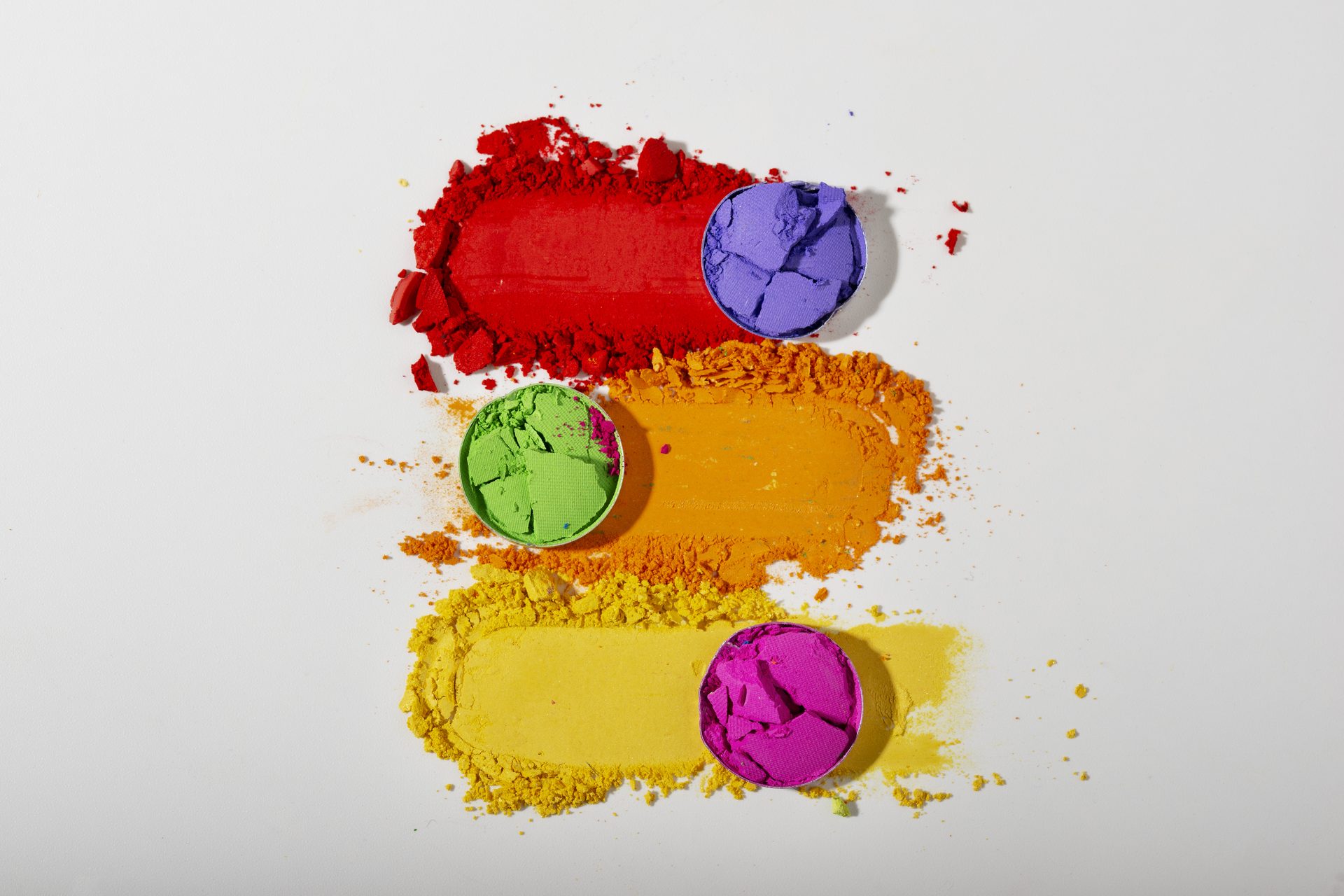
Cosmetics are woven into daily life, from a lipstick to an evening skincare routine, and they shape how people present themselves. With that ubiquity comes a reasonable interest in what is inside them, and colourants attract more scrutiny than most ingredient classes.
The role of colouring agents
Colourants are central to cosmetics. They give colour cosmetics their entire function, and they contribute to the appearance and identification of skincare too. Some colour the product itself; others are intended to deposit colour on skin, hair or nails. Bold, saturated palettes have been in the ascendancy for several years, which puts more colourant into more products than before.
Two classifications that get conflated
Colourants are commonly split into synthetic and natural, by origin. There is a second, independent split (organic versus inorganic), which describes chemistry: organic means carbon-based and inorganic means mineral. The two axes are separate. A synthetic iron oxide is inorganic; naturally derived carmine is organic. Conflating them is a common source of confusion, and the Colour Index encodes only the second: below CI 77000 organic, from CI 77000 upward inorganic. See how to read a CI number.
Synthetic colouring agents
Synthetic colourants are manufactured rather than extracted, and they dominate cosmetic colour for good technical reasons: consistent shade batch to batch, a wide gamut including shades no natural source provides, and predictable stability to light, heat and pH.
The safety question here is worth putting precisely, because it is usually put too loosely. The concern is not "synthetic" as a category; it is unapproved colourants. Industrial dyes never assessed for human exposure, used illegally in cosmetics or food, have caused genuine harm, and adulteration cases still appear. Separately, some colourants once permitted have been delisted as evidence accumulated, which is the regulatory system working rather than failing.
Approved colourants have been through toxicological review for stated applications and concentrations. FD&C colours are the US example, with each batch of a certifiable colour tested and issued a certification lot number; the EU lists permitted cosmetic colourants in Annex IV of Regulation (EC) No 1223/2009. In both cases approval is application-specific: cleared for rinse-off does not mean cleared for lip or eye area.
Natural colouring agents
Natural colourants are extracted from plants, minerals, microorganisms and, in some cases, animals: carotenoids, anthocyanins, chlorophylls, henna, carmine from cochineal insects.
Interest in them is real and the demand is genuine. But one claim needs correcting, because it is repeated so often it has become assumed: natural origin does not establish safety. Safety is determined by toxicological assessment of a specific substance at a specific concentration and exposure route, and where a material came from is not part of that determination. Concrete examples make the point better than the principle does: carmine is a well-documented allergen, capable of causing serious reactions in sensitive individuals; henna's active, lawsone, is restricted in cosmetics for several uses; and a number of plant-derived colourants have poorer toxicological profiles than the approved synthetics they would replace. Natural colourants used in cosmetics require the same regulatory approval and appear on the same positive lists.
The technical challenges are also real. Batch-to-batch variation follows the harvest; light and pH stability are often poorer, so shades shift over shelf life; the accessible gamut is narrower; and cost per unit of colour strength is usually higher. Nor is environmental benefit automatic: pigment yields are low, so a kilogram of natural colour can represent a great deal of land, water and biomass.
Future of colouring agents in cosmetics
Demand for naturally derived colour is growing and the industry is responding, most interestingly through biotechnology: precision fermentation can produce specific pigment molecules with consistency and yields that agricultural extraction cannot, without the land and water cost. That is a more promising route than extraction scaled up, and it sidesteps the batch-variability problem entirely.
Making an informed choice
The useful question is not whether a colourant is natural or synthetic, but whether it is approved for the application, used within its permitted concentration, and backed by documentation you can inspect. Ask for the CI number, the regulatory status in your market and the certification lot where applicable. Environmental and ethical considerations are legitimate and worth weighing; they are a separate assessment from safety, and better made substance by substance than by category.
Frequently asked
Are natural colourants safer than synthetic ones?
Not as a rule. Safety is established by toxicological assessment of a specific substance at a specific concentration, and origin is not part of that determination. Carmine, a natural colourant from cochineal insects, is a well-documented allergen; several approved synthetics have cleaner profiles.
What is the difference between natural/synthetic and organic/inorganic?
They are two separate classifications. Natural versus synthetic describes where a colourant came from. Organic versus inorganic describes its chemistry: organic means carbon-based and inorganic means mineral. A synthetic iron oxide is inorganic; a natural carmine is organic.
Are natural colourants better for the environment?
Not automatically. Plant-derived colourants require land, water and agricultural inputs, and low pigment yields mean large volumes of biomass per kilogram of colour. Environmental impact needs assessing case by case rather than by origin.