2025-12-30 · 5 min read
A brief study on Sunbest-HEB (iscotrizinol)
Full technical profile of Diethylhexyl Butamido Triazone: structure, CAS, absorption band, solubility, use levels, toxicology and regulatory status by market.
Sun care · Formulation · Regulatory
Background. Ultraviolet radiation is the part of the electromagnetic spectrum reaching Earth with wavelengths shorter than visible light, which makes it invisible to the eye. UV-A (320–400 nm) is the longer-wave band; it penetrates into the dermis, drives photo-ageing and contributes to skin cancer risk. UV-B (290–320 nm) is shorter and more energetic; it is absorbed in the epidermis, causes sunburn, and damages DNA directly.
Result. Sunscreens combine several UV filters to keep that radiation from reaching living skin. Because the two bands damage skin by different mechanisms, and no single filter covers 290–400 nm evenly, filter selection determines how well a formula performs across the spectrum.
The American Academy of Dermatology recommends broad-spectrum protection at SPF 30 or higher, water resistance where relevant, and generous, repeated application. Iscotrizinol is one of the filters used to build such formulas, and this is its profile.
Identification
- Vinner Labs trade name: Sunbest-HEB
- USAN name: Iscotrizinol
- INCI name: Diethylhexyl Butamido Triazone
- Synonyms: Uvasorb HEB, DBT, DHBT
- CAS number: 154702-15-5
- EC number: 421-450-8
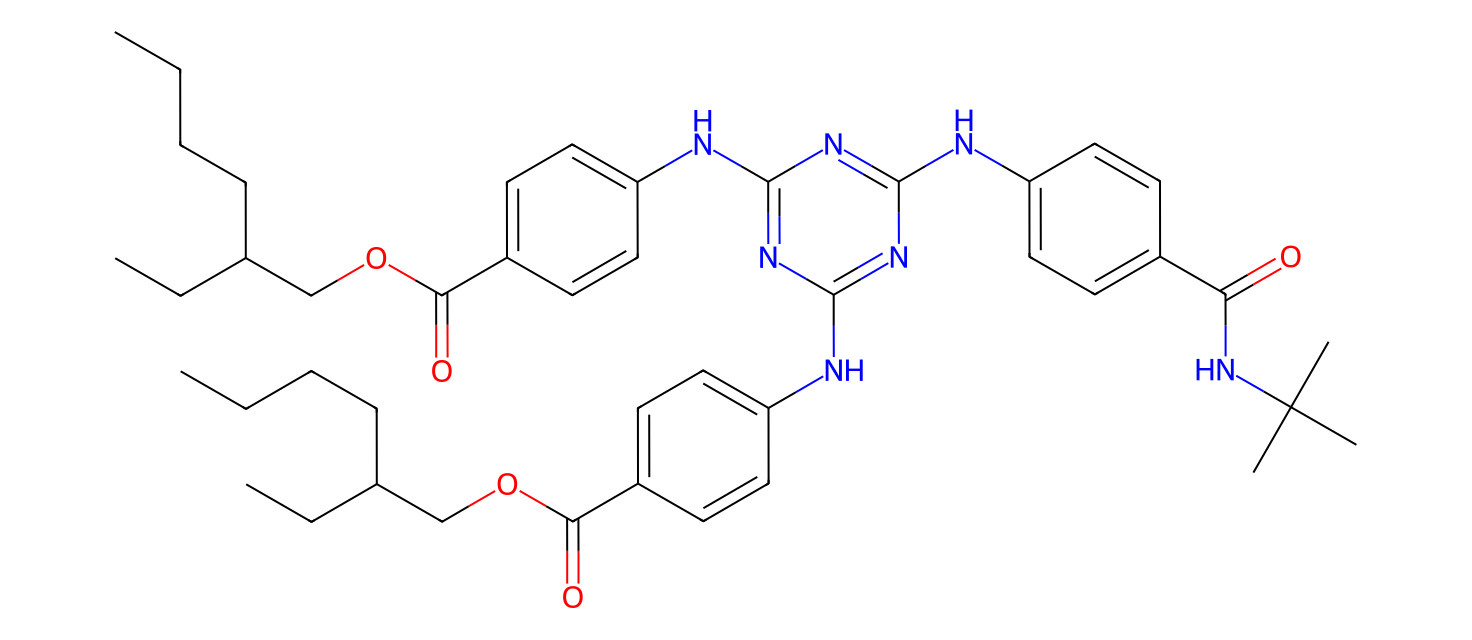
- Molecular formula: C44H59N7O5
- Molecular weight: 765.98 g/mol
- IUPAC name: bis(2-ethylhexyl) 4,4'-[(6-{[4-(tert-butylcarbamoyl)phenyl]amino}-1,3,5-triazine-2,4-diyl)diimino]dibenzoate
UV profile and applications
Iscotrizinol is a triazine-based organic UV filter. Its absorption is principally UV-B, peaking at 310 nm, and extends into UV-A II from 320 to 340 nm. This is worth stating precisely, since it is sometimes described loosely as broad spectrum. It covers the shorter part of the UV-A band, not the whole of it, so a formula wanting full UV-A cover pairs it with a dedicated UV-A filter.
Its molar extinction coefficient is very high, meaning strong absorption per unit weight. Combined with good solubility across a wide range of cosmetic oils, that lets a formulator build high SPF at manageable loading: roughly SPF 12.5 from 10% used alone. Typical use is 5–10%.
Applications include sunscreens, daily-wear SPF moisturisers, creams and lotions, serums, colour cosmetics and foundations, lip care and hair products where photoprotection is wanted.
Physical characteristics
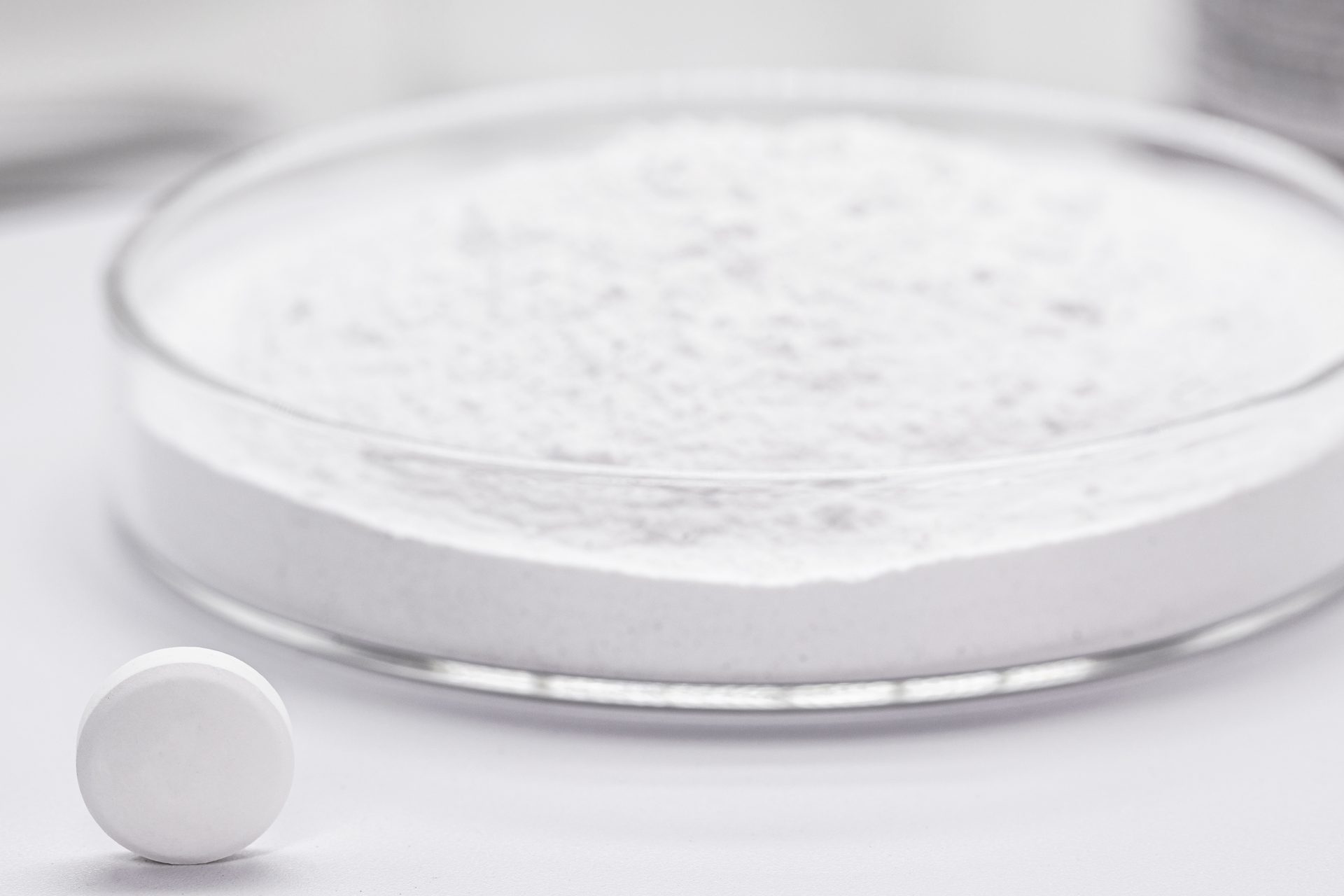
- Appearance: white to off-white powder
- Solubility: very soluble in methanol and ethanol; soluble in oils, chloroform, isopropyl alcohol, isopropyl myristate, propylene glycol, dimethicone and C12–C15 alkyl benzoate; insoluble in water
- Water content: not more than 0.5%
- Melting range: 52–55 °C
- Assay by HPLC: not less than 97.0%
- Shelf life: 2 years
Formulation advantages
- High extinction coefficient, so effective SPF contribution at modest dosage.
- Exceptional photostability: approximately 90% of protection retained after 24 hours, among the best of any organic filter.
- Good synergy with other UV filters, allowing efficient broad-spectrum systems.
- Oil-phase soluble and hydrophobic, which suits water-resistant formulations.
- Very high molecular weight, giving minimal dermal penetration.
Because it is an oil-soluble powder, complete dissolution in the oil phase is essential: undissolved or recrystallised filter contributes no absorbance, and is a common cause of a formula falling short of its predicted SPF.
Safety and toxicology
Human irritation, sensitisation and photosafety studies submitted in support of OTC sunscreen use found that products containing up to 3% diethylhexyl butamido triazone were not irritants, sensitisers, photosensitisers or photoirritants.
- Skin irritation: no irritant effect
- Eye irritation: may have an irritating effect (relevant to raw-material handling)
- Sensitisation: no sensitising effects known
- Reproductive toxicity: NOAEL established at 1000 mg/kg/day in rats, with no effect on the ability of males or females to mate or reproduce
Ecological considerations
Classified Water Hazard Class 3 (WGK 3) under the German system: extremely hazardous to water. It must not be allowed to reach groundwater, watercourses or the sewage system, even in small quantities. This is a manufacturing and waste-handling requirement rather than a consumer-use concern, but it belongs in any site's handling procedures.
Regulatory status
- European Union: permitted to a maximum of 10%, listed in Annex VI of Regulation (EC) No 1223/2009, the Cosmetic Products Regulation. (Older documentation citing Council Directive 76/768/EEC is out of date; that directive was repealed and replaced by Regulation 1223/2009 in July 2013.)
- United Kingdom: UK REACH DUINS registered.
- Japan: not permitted. It does not appear in Appendix 4 (UV absorbers) of the Standards for Cosmetics.
- REACH: registered, European Union, tonnage band ≤ 100 MT.
- Also permitted in a number of Asian, Australian and Latin American markets; confirm the current national list for any given launch.
For what a REACH claim does and does not tell you, see what "REACH registered" tells you. For the measured photostability data across the triazine filters, see photostability of bemotrizinol and iscotrizinol.
References
Safety and effectiveness of diethylhexyl butamido triazone in over-the-counter sunscreen drug products.
Safety data sheet according to Regulation (EC) No 1907/2006, Article 31.
Regulation (EC) No 1223/2009 on cosmetic products, Annex VI.
Frequently asked
What is iscotrizinol used for?
It is an organic UV filter for sun care and daily-wear SPF products. It absorbs mainly UV-B with a peak at 310 nm, reaching into UV-A II from 320 to 340 nm, and is valued for a very high extinction coefficient and exceptional photostability.
What concentration of iscotrizinol is allowed?
Up to 10% in the EU under Annex VI of Regulation (EC) No 1223/2009. It is not on the Japanese UV-absorber positive list, so it cannot be used in cosmetics sold in Japan. Formulators typically use 5–10%; roughly SPF 12.5 comes from 10% used alone.
Is iscotrizinol safe for skin?
Its toxicology profile is favourable: not a skin irritant, no known sensitising effect, and a reproductive-toxicity NOAEL of 1000 mg/kg/day in rats. Its very high molecular weight means minimal dermal penetration. It may irritate eyes as a raw powder, so handle accordingly.